An engineer, management professional with over 30 years experience in senior positions. I come from a family that has 3 generations of Yoga Masters and Therapists. My manual on Situational Awareness for Stress Management is in final stages of design and scheduled for release shortly. Feedback on this blog would greatly assist me in delivering a better book.

Friday, 18 November 2016

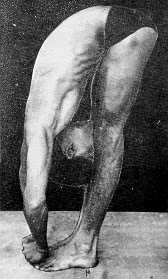
Padahastasana (Feet touching pose)

Technique:
Ø  Stand erect with feet together and hands to the sides.
Ø  Breathe in and lift hands above head.
Ø  Breathing out, bend forward to touch the toes. If possible pull the torso forward so that face touches knee.
Ø  Breathing in come back erect with hands above head.
Ø  Breathe out and drop hands to the sides.
Ø  People with cardiac ailments should do this exercise slowly because of the aerobic nature of the asana.
Benefits:
Ø  The action of bending forward brings suppleness to the lower back and restores strength to the cartilages and muscles on the lower back.
Ø  The action of bending forward stretches and tones the hamstrings.

Ø  This exercise is a very good aerobic exercise.

Friday, 11 November 2016

Trikonasana (Triangle pose)

Technique:
Ø  Stand erect with lets spread to the width of the shoulders. Keep hands to the side.
Ø  Breathe in and raise hands to shoulder height.
Ø  Breathing out, bend to the side so that fingers touch feet. Try to bend only at the waist and keep shoulder, kneesandelbows straight so that the bending action is maximized.
Ø  While bending, keep face straight but move eyes sideways to gaze at the fingertips of the hands that are in the air.
Ø  Breathing in, come back to straight position.
Ø  Breathe in and bring hands back to side.
Ø  People with cardiac ailments should do this exercise slowly because of the aerobic nature of the asana.
Variation:
Ø  Instead of touching the hands to the feet on the same side (right hand touching right feet and left hand touching left feet), cross over and touch the opposite feet (right hand touching left feet and left hand touching right feet)
Benefits:
Ø  The action of bending results in the side muscles being alternately compressed and stretched. This strengthens the muscles and removes fat from the sides.
Ø  The bending action increases flexibility of the spine. All muscles of the spine get toned up.
Ø  The movement of the eyes increases peripheral vision and strengthens the eye muscles.
Some noteworthy points:

Ø  The spacing of the legs is important. Too narrow, and the strain on the side abdominal muscles (oblique miscles) can lead to cramps. Too wide, and the strain on the inside thighs can be very high.

Tuesday, 8 November 2016

YogaMudra (Yogic Icon Pose)

Technique: (Should be learned under supervision)
Ø  Sit in Padmasana. Experience the balance.
Ø  Place hands on the heels with hands pointing inwards. Breathe in.
Ø  Breathing out, bend forward till the face touches the ground. In case you are doing this for the first time, bend forward only till you reach the limits of comfort. Hold for 10 counts.
Ø  Bring the body back to original position in Padmasana.
Ø  Bring the legs to original position.
Ø  Once is enough. Increase the duration slowly.
Benefits:
Ø  The action of bending forward against the resistance of the heel stretches the lower back. This tones up the back and relieves any stress in the lower back. This stretching also energises the cartilages along the complete spine and tones it up.
Ø  The forward action pushes in the viscera and induces peristalsis. This exercise is good for curing constipation. The action of pushing also invigorates all the organs in the stomach such as pancreas, liver, and intestines and normalises their functioning.
Ø  This exercise to a minor extent removes excess adipose tissues and reduces fat.
Some noteworthy points:
Ø  People with cardiac ailments and obesity should avoid this exercise.

Ø  Those with lower back problems should not go to the complete position. Instead, it is advisable that they go forward till there is discomfort in the lower back and stop. Do sethubandasana after this.

Friday, 28 October 2016

ArdhaMatsyandarasana (Half fish twist pose)
Technique: (Should be learned under supervision)
Ø  Sit on the left heel touching the perineum below the genitals, men should carefully lift the scrotum away from harm. Ensuring that the heel is securely anchored on the perineum and not shifting.
Ø  Lift the right leg over the left thigh and plant the sole of the right foot as close as possible to the left hip joint.
Ø  Using the right hand pull the folded knee close to the body and anchor it under the left armpit.
Ø  Twist around and try to catch the right ankle with the right hand. Turn the face in the direction of the twist.
Ø  Breathe shallow. Maintain for 10 counts. Repeat in the other direction in the same manner but changing the directions. Repeat 3 to 6 times in both directions.
Benefits:
Ø  The exercise is excellent for retaining spinal curvature. Continuous exercise will prevent backache and hip ailments. It stabilises the position of the shoulder blades and energises the back muscles. It helps increasing flexibility of the body. This exercise also tones up the sympathetic and parasympathetic nervous system.
Ø  The action of twisting the torso rejuvenates all the organs associated with digestion; the stomach, pancreas, liver and intestines. It optimises production of enzymes and absorption of nutrition. It also forces toxins out, thereby cleaning up the digestive system. This exercise is good for indigestion, diabetes, and other stomach ailments.
Some noteworthy points:
Ø  People with any form of spondylitis should do this asana under supervision.
Ø The spine consists of 3 major areas; the cervical region or neck, Thoracic/dorsal or upper back and lumbar/lower back put together by a total of 24 bones, called vertebrae. Discs of cartilage separate these bones absorbing shock and allowing the spine to bend. The spine carries the spinal chord, a critical component of the central nervous system. In order to stay healthy, the spine need to be exercised in the forward, backward, sideways directions and twisted as shown above.

Ø  The extreme twisting of torso also results in the stretching and pushing of the stomach and intestines. So after performing this asana, don’t be surprised if there is a bout of flatulence and burping. This is just the release of air which is trapped in the alimentary canal which is forced out by the asana.

Friday, 14 October 2016

Shirasasana (Head Stand)

Technique: (Should be learned under supervision)
Ø  Spread a thick cloth pad against a wall. Kneeling in front of the pad, bend forward and place hands on the spread to form a “V” at an angle of approximately 60 degrees. The palms should be turned facing the body with fingers interlaced.

Ø  Place the top of the head firmly on the pad in the cradle of the interlaced hands so that the palms support the back of the head.
Ø  Slowly lift the knees and move legs up so that the torso rises till it is vertical with the head. Leveraging with elbows, shoulder and lower back muscles, lift off the ground smoothly.

Ø  As the torso rises, keep knees together. Get into an upside down position.
Ø  Stabilise position and straighten the legs. After sufficient practice one could begin doing this exercise away from a wall. In this case after lifting the legs off the ground, fold them at the knees square to the body for balance.
Ø  The body should be held straight in the final position. Maintain normal breathing. Focus on the movement of breath at the throat.
Ø  Start with 10 secs. initially. Normal cycle is 3 to 20 minutes. Descend in reverse order, slowly.
Benefits:
Ø  This exercise infuses oxygen pregnant blood into the central nervous system. As a result, brain cells are invigorated, waste cleaned and removed. The oxygen stabilises the brain’s metabolic activity. Therefore, this exercise is good for behavioural and psychological development.
Ø  The eyes, eye muscles, retinal nerves are flushed with oxygen impregnated blood. Hence, very good for health of the eye.
Ø  This asana energises the pituitary glands, hypothalamus and thalamus which controls the functioning of testes in men and all the endocrine organs such as the thyroid and adrenaline glands.
Ø  The downward force of blood also helps in infusing blood to the ears, eyes, mucous tissues and salivary glands. The throat breathing balances ear pressure.
Ø  Good for maintaining body fat balance since pituitary also regulates the balance between water and salt in body fluids through the kidneys.
Ø  Also, the downward pressure of the colon contents increases peristalsis and cures constipation. The cartilage gets strengthened because of reverse pressure on the spine.
Some noteworthy points:
Ø  Do not do this exercise if one has high BP, cervical spondylitis, hernia or renal disease etc.
Ø  Do not relax the abdomen. It can cause the walls to collapse and tearing of the inguinal hernia.
Ø  Needless to say, this asana will also benefit the thyroid. Indeed, this asana is indispensible for bringing balance to the endocrine system.
Wednesday, 12 October 2016


Sundara Vipareethakarani (Inverted hypotenuse)
Technique: (Should be learned under supervision)
Ø Place 3-5 hard pillows on the mat in such a way that the pillows are at an angle of 60 degrees with respect to the floor.
Ø Sit at the other end and slowly lower the torso so that the shoulders rest on the floor. Ensure that the torso is at 45 degrees to the floor.
Ø Fold legs towards the body and raise them straight into the air. Move the legs towards the torso, so that the legs and torso are at 90 degrees to each other.
Ø Place hands at the sides.
Ø Hold position for 5 minutes, increasing up to 20 minutes.


Variation :
Ø Should hard pillows not be available, it is possible to perform the asana by supporting the hip with the hands.
Ø Bend the knees over the torso to touch the forehead with the knees.
Ø Support the hips with the hands just above the hip bone and let the hips rest on the floor, such that the torso is at 45 degrees to the floor.
Ø Lift the legs and align it such that it is at 90 degrees to the torso.
Benefits:
Ø This exercise ensures concentration of blood supply to the heart, lungs, liver, pancreas, kidneys, stomach and respiratory tract. It is good for all illnesses related to the torso and neck, including respiratory disorders, heart and digestion disorders.
Ø This exercise builds resistance to all forms of allergies, colds and flu.

Some noteworthy points:

Ø Vipareetha = inverted + karni = hypotenuse in Sanskrit. The torso should be at right angle to the legs and the toes should form a hypotenuse with the head.
Ø This is one of the easiest and most effective asanas.

Friday, 7 October 2016

Matsyasana (Fish Pose)
Technique: (To be learned under supervision)
Ø  Sit in Padmasana (Asana1). Slowly fall on the back using the elbows as support until completely on the ground.
Ø  Using the hands, lift the shoulders off the ground while folding the head towards the body till the trachea is completely stretched and the body is balanced on the top of the head.
Ø  Slowly release the load on the hands by releasing them and retaining the weight of the body on the head. Ensure that the body is in balance.
Ø  Move the hands forward to grip the toes. Haul on the toes using the hands to stress the back in the reverse direction. Maintain position for around 10 seconds. Maintain shallow breathing.
Ø  Release the hands. Straighten the legs. Stretch the body. Relax.
Benefits:
Ø  The reverse neck lock reverses and compensates the pressure created by the neck lock created by sarvangasana and halasana. So, halasana should be followed by sarvangasana and finally by matyasana.
Ø  This exercise is good for toning the neck, shoulders muscles, upper, middle and lower back. This exercise stretches the chest and abdominal muscles thereby toning them.
Ø  This asana increases blood supply to the brain stem and the movement increases its suppleness. The complex and sensitive muscles of the neck and head are exercised and rejuvenated.
Some noteworthy points:
Ø The pulling of the feet increases the lumbar arch and rejuvenated the sympathetic and para-sympathetic nervous system.
Ø  The pulling of the feet also increases flexibility of the knees and improves ability to perform padmasana.
Ø  Be very careful when increasing pressure on the neck muscles. A jerk or improperly balanced pull could easily result in muscle or ligament damage in the neck and this can be very painful.